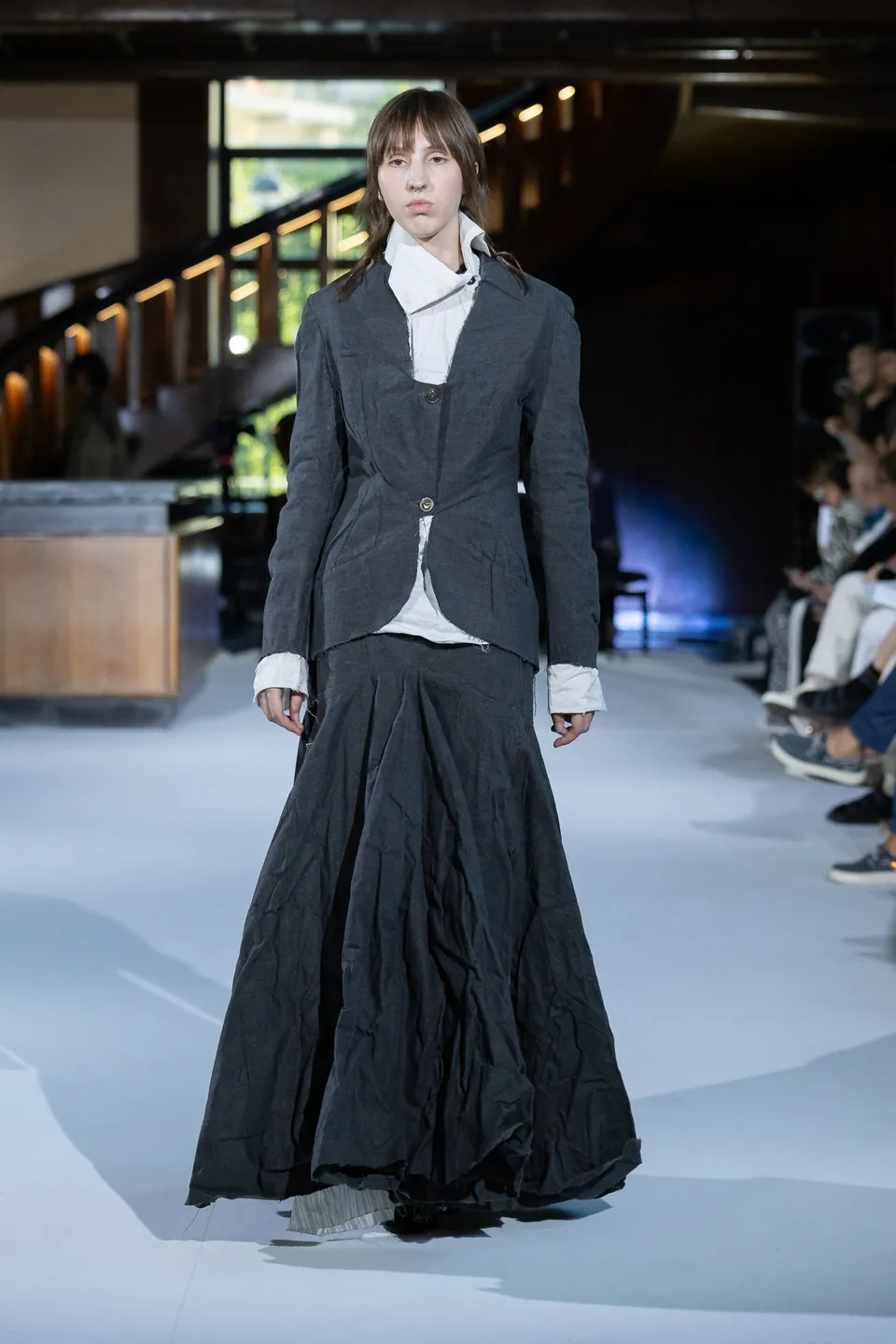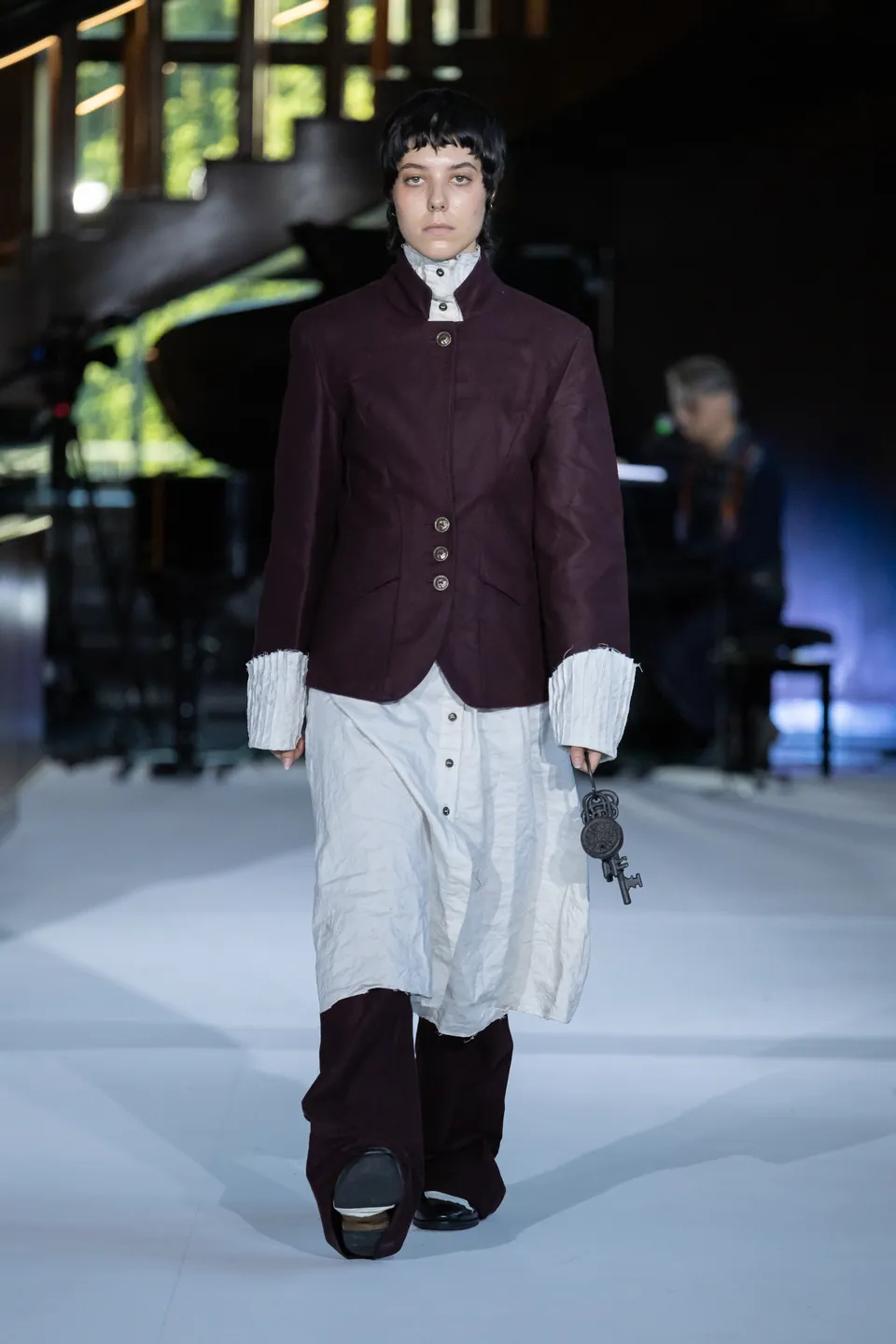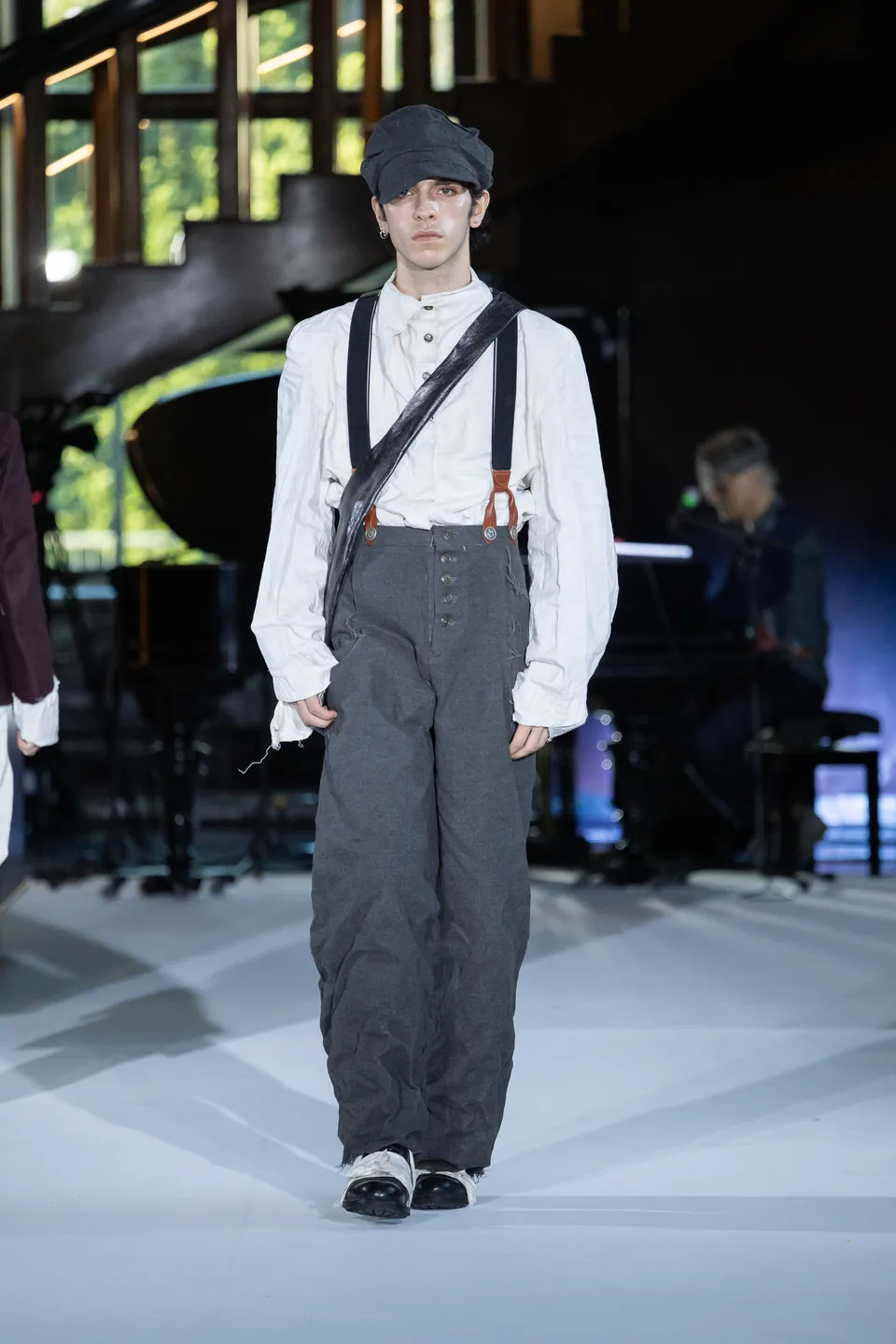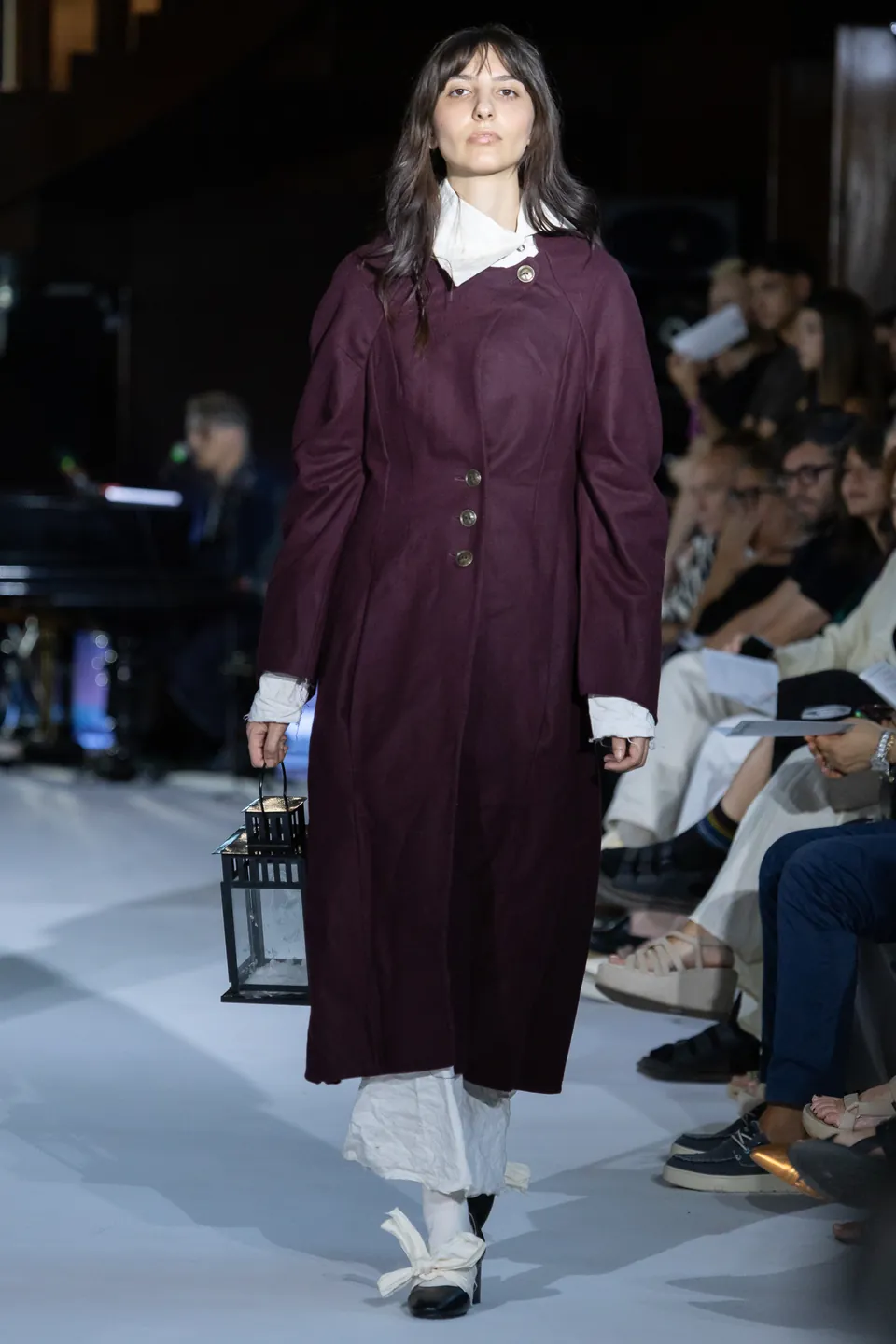

When we talk about avant-garde, it's natural to picture something extreme — a shape or an image that hits you immediately. This project starts from a different idea: that the most authentic form of avant-garde isn't an aesthetic, but a way of working. This is where my graduate collection began.
Unlike artistic avant-garde, which historically set out to revolutionise the language of art and its relationship with society, avant-garde in fashion tends to live in the project and the process rather than in the final image. In the designers I looked to, innovation isn't found in the shape of the garment itself, but in how it's conceived, built and made.
This reflection grew out of observing three figures I consider essential. Paul Harnden, an English tailor working between London and Spain, builds his practice on slow, handmade research, far removed from industrial rhythms and the logic of the fashion system. Carol Christian Poell, an Austrian designer based in Milan, pursues an extreme investigation of the body, constantly questioning the relationship between anatomy, garment construction and production process. Maurizio Altieri, through his Carpe Diem project, works between Italy and Eastern Europe on a method built around single-piece patterns, meticulous craftsmanship and an almost obsessive attention to how things are actually made.
From these three paths, I borrowed not a style but a way of thinking about design: the recipe. Not a rigid formula to follow to the letter, but a sequence of steps that guides the work without confining it.
The research unfolded on two parallel levels: on one side, studying the methods of these designers; on the other, analysing the historical costume that had inspired them in turn. I focused on reworking that costume — trying to understand its original construction and then translating it onto a contemporary body, not to faithfully reproduce silhouettes from the past, but to extract their underlying principles and turn them into something new.
This is where the collection's central idea comes from: costume not as something frozen in time, nostalgic or purely referential, but as an open system — something that can be taken apart, reinterpreted and rebuilt, while keeping intact its ability to keep changing.
In this sense, the avant-garde I'm interested in doesn't live in the final appearance of the garment, but in how it's thought through, constructed and transformed. It's an attitude that treats the past not as an archive to preserve, but as living material, capable of generating new forms and new readings of the present.
- Designer
- Tommaso Curatella
- Styling
- Viola Barletti
- Model
- Nika
- Make-up artist
- Gaia Castrone
- Photography
- Viola Barletti
Garments
Coming soon
- Designer
- Tommaso Curatella
- Make up
- Gaia Castrone
- Styling
- Viola Barletti
- Directed by
- Ludovico Succio
Naba Fashion Show Recipes 2026